
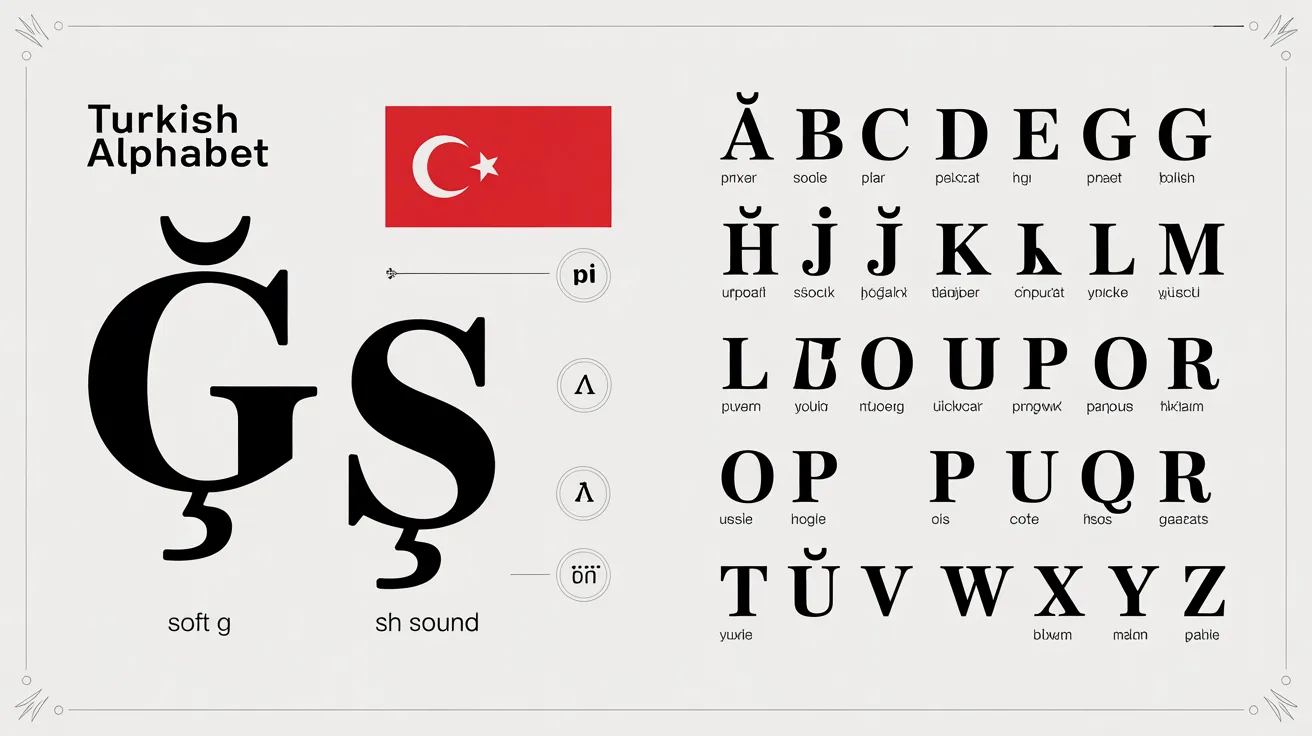
The Turkish language uses a unique alphabet that contains several special characters not found in standard English. Among these letters are “Ğ” (soft g) and “Ş” (sh sound). These characters are important parts of the Turkish writing system and play a key role in pronunciation and meaning. Understanding how these letters work helps learners read and speak Turkish more accurately. Although they may look unusual to people unfamiliar with the language, their functions become clear once their pronunciation and usage are explained.
The Turkish Alphabet
The modern Turkish alphabet consists of 29 letters and is based on the Latin script. It was introduced in 1928 during language reforms in Turkey led by Mustafa Kemal Atatürk. The goal of this reform was to make reading and writing easier compared to the old Ottoman script, which was based on Arabic characters.
The Turkish alphabet includes several letters that do not appear in English. These include Ç, Ğ, İ, Ö, Ş, and Ü. Each of these letters represents a specific sound in Turkish pronunciation. Among them, the letters Ğ and Ş are particularly interesting because they serve unique phonetic functions.
The Letter Ğ (Soft G)
The letter Ğ, called “yumuşak g” in Turkish, literally means soft g. Unlike many other consonants, this letter usually does not produce a strong sound when spoken. Instead, it lengthens the vowel that comes before it or creates a slight glide between vowels.
Because of this property, the letter Ğ is sometimes confusing for beginners. It rarely appears at the beginning of words and is mostly found in the middle or end of words.
Examples of words containing Ğ include:
- dağ – mountain
- soğuk – cold
- yağmur – rain
- ağaç – tree
In these words, the letter Ğ does not produce a clear “g” sound like in English. Instead, it stretches or softens the surrounding vowel sounds.
Pronunciation of Ğ
The pronunciation of Ğ depends on its position within a word. In many cases, it lengthens the preceding vowel. For example, in the word dağ (mountain), the vowel “a” is pronounced slightly longer.
When it appears between two vowels, it may create a gentle transition between them. For instance, in the word soğuk (cold), the pronunciation smoothly connects the vowels around the letter.
Because the sound is subtle, many learners initially find it difficult to hear or pronounce the letter correctly. However, with practice and listening to native speakers, the usage becomes more natural.
The Letter Ş
The letter Ş represents the “sh” sound in English words such as “shoe” or “she.” It is pronounced exactly like the English “sh” sound. This letter appears frequently in Turkish words and is much easier for learners to pronounce than Ğ.
Examples of words containing Ş include:
- şeker – sugar
- şarap – wine
- şehir – city
- şarkı – song
In each of these examples, the letter Ş produces the familiar “sh” sound.
Pronunciation of Ş
The pronunciation of Ş is straightforward. It is always pronounced as “sh.” This consistency makes Turkish pronunciation easier compared to some other languages where letters may have multiple sounds.
For example:
- şemsiye – umbrella
- şoför – driver
- şans – luck
- şimdi – now
In these words, the letter Ş produces the same sound each time.
Importance of Special Letters in Turkish
Special letters such as Ğ and Ş are essential because they distinguish between words that would otherwise look similar. In Turkish, changing one letter can completely alter the meaning of a word.
For example, the difference between s and ş changes pronunciation and meaning. Therefore, using the correct letter is important for accurate communication.
These characters also help represent the unique sounds of the Turkish language more precisely than a simplified alphabet would.
Learning Turkish Pronunciation
For learners studying Turkish as a foreign language, understanding special characters is an important step. Many language courses emphasize listening practice because hearing native pronunciation helps learners recognize how letters like Ğ function in real speech.
Some useful methods for learning Turkish pronunciation include:
- Listening to Turkish music and podcasts
- Watching Turkish television shows or movies
- Practicing reading Turkish texts aloud
- Using language learning applications
With consistent practice, learners gradually become comfortable with the unique sounds of the language.
Digital Usage of Turkish Characters
In modern digital communication, typing special Turkish letters sometimes requires using specific keyboard settings. Turkish keyboards include dedicated keys for letters such as Ğ and Ş. On other keyboards, these characters can be inserted using language settings or special character tools.
Using the correct letters is important in digital writing because replacing them with standard English letters can change the meaning of words.
Cultural Importance of the Turkish Language
The Turkish language is spoken by millions of people primarily in Turkey and also by communities in Europe, Central Asia, and the Middle East. The language has a rich history influenced by many cultures and civilizations.
The alphabet reform introduced in 1928 modernized the writing system and helped increase literacy rates across the country. Special letters like Ğ and Ş remain key components of this modern alphabet.
Conclusion
The letters Ğ and Ş are important parts of the Turkish alphabet and reflect the unique sounds of the Turkish language. The letter Ğ, known as the soft g, often lengthens vowels and creates smooth transitions in pronunciation. Meanwhile, the letter Ş represents the clear “sh” sound that appears in many Turkish words.
Understanding these letters helps learners read, pronounce, and write Turkish correctly. Although they may seem unusual at first, they play a crucial role in the structure and beauty of the language. By practicing pronunciation and learning how these letters function, students can gain greater confidence in reading and speaking Turkish.