
The automotive world thrives on innovation, and few ideas have sparked as much excitement as the concept of a Mustang Raptor. By merging the iconic legacy of the Ford Mustang with the rugged, off-road dominance of the Ford F-150 Raptor, this concept challenges traditional boundaries and redefines what a performance car can be. Although Ford Motor Company has not officially released such a model, the possibility alone has ignited global interest among car enthusiasts, designers, and industry experts.
The Evolution of Mustang and Raptor DNA
To understand the appeal of a Mustang Raptor, it is important to look at the roots of both the Mustang and the Raptor lineup. The Mustang, first introduced in 1964, quickly became a symbol of American muscle, representing speed, style, and freedom. Over the decades, it has evolved while maintaining its identity as a performance-focused sports car.
On the other hand, the Raptor badge represents off-road excellence. Vehicles like the Ford Bronco Raptor and the F-150 Raptor are engineered to conquer harsh terrains, from deserts to rocky trails. They feature advanced suspension systems, powerful engines, and durable designs built for extreme conditions.
Combining these two automotive philosophies—track performance and off-road capability—creates a compelling and unconventional vision.
Design Philosophy: Aggression Meets Utility
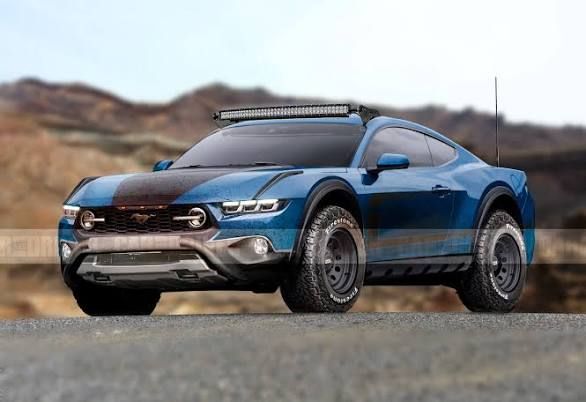
A Mustang Raptor would not simply be a modified Mustang with larger tires. It would require a complete redesign to balance performance and durability. The exterior would likely feature a significantly raised ride height, allowing it to clear obstacles that would challenge a standard sports car.
Wide fender flares would accommodate oversized all-terrain tires, while reinforced bumpers and skid plates would protect vital components. The front fascia might incorporate the bold “FORD” grille signature seen in Raptor models, giving it a commanding presence.
Aerodynamics would also play a role, though in a different way than traditional Mustangs. Instead of focusing solely on high-speed efficiency, the design would need to manage airflow for cooling and stability in off-road environments. The result would be a muscular yet functional appearance—part sports car, part desert racer.
Powertrain and Performance Engineering
Performance is at the heart of any Mustang, and a Raptor variant would be no exception. However, the focus would shift from top speed and lap times to torque delivery and durability.
A likely candidate for the engine would be a high-output EcoBoost V6, similar to what powers the F-150 Raptor. This engine provides strong low-end torque, which is essential for off-road driving. Alternatively, Ford could explore a naturally aspirated or supercharged V8 to maintain the traditional Mustang character while enhancing performance.
The drivetrain would almost certainly include an advanced all-wheel-drive system. Unlike rear-wheel-drive Mustangs, which are designed for controlled traction on pavement, an AWD system would provide the grip needed for sand, mud, and uneven terrain.
Transmission tuning would also differ, prioritizing smooth power delivery and adaptability across various driving conditions. The goal would be to create a vehicle that performs equally well on highways and off-road trails.
Suspension and Off-Road Capability
One of the most critical aspects of a Mustang Raptor would be its suspension system. Off-road performance demands long-travel suspension capable of absorbing shocks from rough terrain.
High-performance shock absorbers, such as FOX Live Valve shocks, could be integrated to provide real-time adjustments based on terrain conditions. This technology allows the vehicle to maintain stability and comfort even in extreme environments.
Ground clearance would be significantly increased, and underbody protection would ensure that rocks and debris do not damage essential components. The vehicle might also include multiple terrain modes, allowing drivers to optimize performance for sand, snow, mud, or rocks.
This level of engineering would transform the Mustang from a road-focused sports car into a versatile off-road machine.
Interior: Balancing Comfort and Durability
Inside, the Mustang Raptor would likely blend premium features with rugged practicality. Traditional Mustang interiors emphasize driver-focused design, and this philosophy would continue, but with added durability.
Seats would be designed for both comfort and support, especially during off-road driving. Materials such as reinforced leather or weather-resistant fabrics would ensure longevity. The cabin might also include additional grab handles and storage solutions for outdoor adventures.
Technology would play a significant role. A large infotainment system with off-road navigation, trail mapping, and camera views would enhance the driving experience. Digital displays could provide real-time data on terrain conditions, suspension performance, and vehicle dynamics.
Despite its rugged nature, the Mustang Raptor would still aim to deliver a premium driving experience.
Market Position and Competitors
If introduced, the Mustang Raptor would occupy a unique position in the automotive market. It would not have direct competitors, as most off-road vehicles are trucks or SUVs, not sports cars.
However, it could attract buyers who are interested in high-performance vehicles with added versatility. Enthusiasts who enjoy both speed and adventure would find this concept particularly appealing.
The growing popularity of cross-category vehicles suggests that there is a market for innovative designs like this. Automakers are increasingly blending features from different segments to meet evolving consumer demands.
Challenges and Feasibility
While the Mustang Raptor is an exciting concept, bringing it to production would present several challenges. Engineering a vehicle that excels both on-road and off-road requires careful balance.
Weight distribution, structural integrity, and cost are all factors that would need to be addressed. Additionally, maintaining the Mustang’s identity while transforming its capabilities could be a complex task.
There is also the question of market demand. While enthusiasts are excited about the idea, Ford would need to ensure that there is sufficient interest to justify production.
Cultural Impact and Enthusiast Appeal
Even as a concept, the Mustang Raptor has made a significant impact on automotive culture. It represents creativity and the willingness to challenge conventions.
Car enthusiasts have created numerous renders and custom builds, showcasing their interpretations of what a Mustang Raptor could look like. These projects highlight the passion and imagination within the automotive community.
The idea also reflects a broader trend of personalization and experimentation, where traditional categories are no longer rigid.
The Future Possibility
As the automotive industry continues to evolve, concepts like the Mustang Raptor become increasingly plausible. Advances in technology, such as adaptive suspension systems and hybrid powertrains, make it easier to combine different performance characteristics.
Ford Motor Company has already demonstrated its ability to innovate with vehicles like the Bronco Raptor. Expanding the Raptor brand into new segments could be a logical next step.
Whether or not the Mustang Raptor becomes a reality, it serves as a powerful example of what is possible when creativity meets engineering.
Conclusion
The Mustang Raptor is more than just a concept—it is a vision of the future of performance vehicles. By blending the heritage of the Mustang with the off-road capabilities of the Raptor lineup, it challenges traditional definitions and opens new possibilities.
While it may not yet exist as a production model, its impact is undeniable. It has captured the imagination of enthusiasts and sparked conversations about the future of automotive design.
If Ford Motor Company ever decides to bring this concept to life, it could redefine both the Mustang legacy and the Raptor brand, creating a vehicle that is truly one of a kind.