
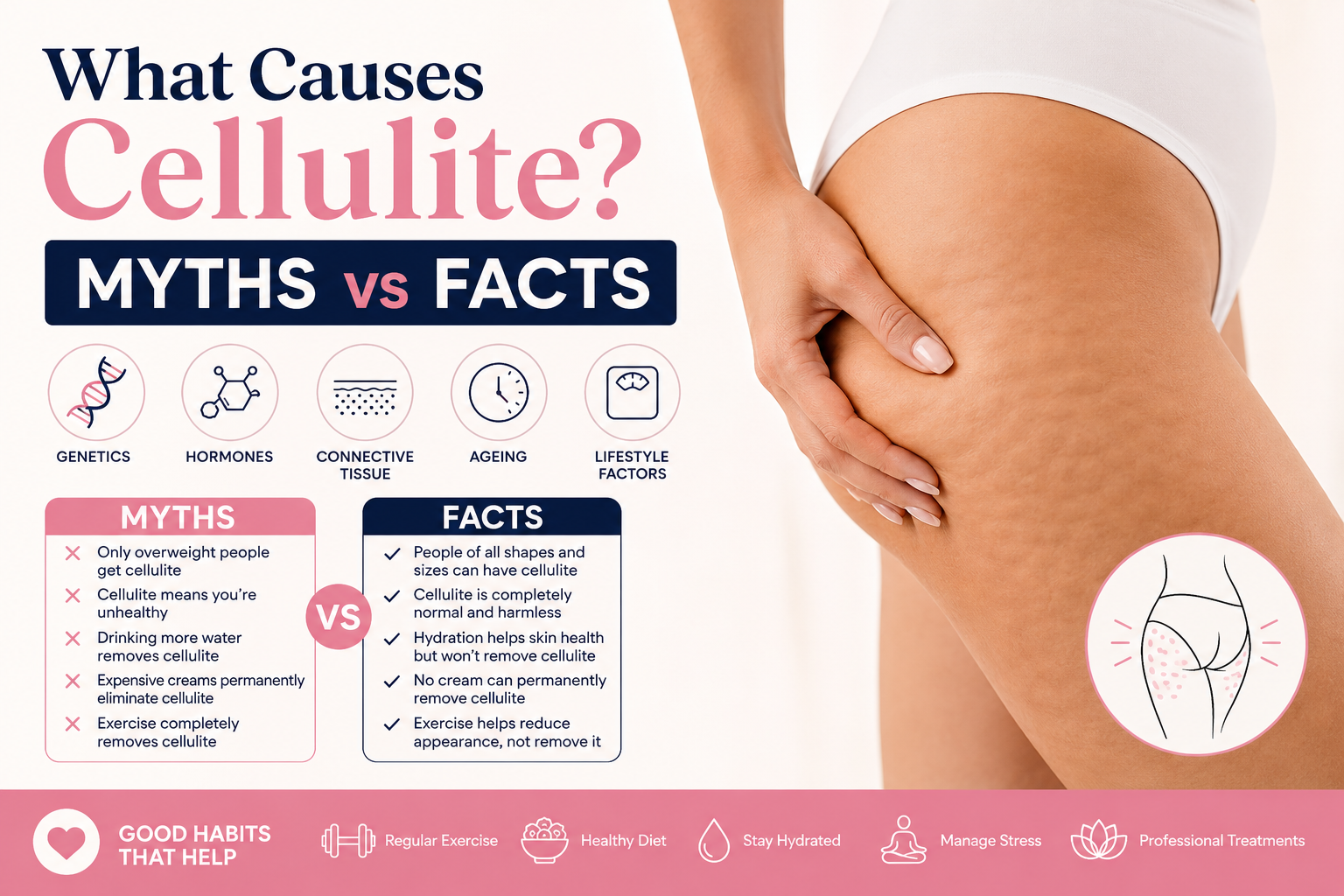
Cellulite is one of the most common skin concerns affecting women and, to a lesser extent, men. If you’ve ever wondered what causes cellulite, you’re certainly not alone. Despite being completely normal, cellulite is often misunderstood because of misleading advertisements and beauty myths.
In the UK, millions of people experience cellulite regardless of their age, body shape, or fitness level. While many products claim to eliminate cellulite permanently, the truth is far more complex. Understanding the real causes can help you make informed decisions about skincare, lifestyle, and available treatment options.
In this guide, we’ll explore the science behind cellulite, debunk common myths, and explain what really works.
What Is Cellulite?
Cellulite is a harmless skin condition where the skin develops a dimpled or uneven appearance. It commonly appears on the thighs, hips, buttocks, abdomen, and sometimes the upper arms.
The uneven texture occurs when fat deposits push through the connective tissue beneath the skin. This creates the familiar “orange peel” or “cottage cheese” appearance.
Although cellulite is often viewed as a cosmetic concern, it is not a medical condition and does not indicate poor health.
What Causes Cellulite?
Many people assume cellulite develops because of excess fat, but that’s only part of the story. Several factors work together to create its appearance.
1. Genetics
Genetics play a major role in determining whether you’ll develop cellulite.
Your genes influence:
- Skin thickness
- Fat distribution
- Connective tissue structure
- Blood circulation
- Metabolism
If close family members have cellulite, you’re more likely to develop it too.
2. Hormones
Hormones significantly affect cellulite formation.
Oestrogen, insulin, thyroid hormones, and cortisol all influence how fat is stored and how connective tissue behaves.
Hormonal changes during puberty, pregnancy, menopause, or ageing may make cellulite more noticeable.
3. Connective Tissue Structure
Women naturally have connective tissue arranged differently from men.
Their connective tissue bands run vertically, allowing fat cells to push upward more easily, creating dimples.
Men typically have a criss-cross connective tissue pattern, making cellulite less common.
4. Ageing
As we age, our skin gradually loses collagen and elasticity.
Thinner skin makes underlying fat deposits more visible, increasing the appearance of cellulite.
Reduced circulation and muscle tone may also contribute.
5. Body Fat Percentage
Although slim people can have cellulite, increased body fat may make it more visible.
However, losing weight does not always eliminate cellulite completely.
6. Lifestyle Factors
Certain habits may worsen cellulite appearance, including:
- Lack of regular exercise
- Poor nutrition
- Smoking
- Excessive alcohol consumption
- Dehydration
- Prolonged sitting
While these factors don’t directly cause cellulite, they can make it more noticeable.
Common Myths About Cellulite
Let’s separate fact from fiction.
Myth 1: Only Overweight People Get Cellulite
Fact: False
People of all body sizes can develop cellulite.
Many athletes and slim individuals also have cellulite because genetics and connective tissue structure play a much larger role than weight alone.
Myth 2: Cellulite Means You’re Unhealthy
Fact: False
Cellulite is completely normal.
Having cellulite does not indicate poor health or lack of fitness.
Many healthy people with active lifestyles still experience cellulite.
Myth 3: Drinking More Water Will Remove Cellulite
Fact: Partly True
Hydration improves overall skin quality.
However, drinking water alone cannot eliminate cellulite.
It may help skin appear smoother but won’t remove the structural causes beneath the skin.
Myth 4: Expensive Creams Permanently Remove Cellulite
Fact: Mostly False
Many creams temporarily improve skin texture by hydrating or tightening the skin.
However, no topical cream has been proven to permanently eliminate cellulite.
Myth 5: Exercise Completely Removes Cellulite
Fact: Not Exactly
Exercise helps reduce body fat and builds muscle, improving body shape.
While this can reduce cellulite visibility, it usually cannot remove it entirely.
Myth 6: Cellulite Is a Disease
Fact: False
Cellulite is a natural cosmetic condition.
It is not dangerous and does not require medical treatment unless someone wishes to improve its appearance.
What Really Helps What is Causes Cellulite Reduce Cellulite?
Although there’s no permanent cure, several approaches may improve skin texture.
Regular Exercise
Strength training combined with cardiovascular exercise helps:
- Build lean muscle
- Improve circulation
- Reduce excess fat
- Enhance overall skin appearance
Walking, cycling, swimming, and resistance training are all excellent options.
Healthy Diet
A balanced diet supports healthier skin.
Include:
- Lean proteins
- Fresh fruits
- Vegetables
- Whole grains
- Healthy fats
- Plenty of water
Reducing processed foods and excess sugar may also help.
Maintaining What is Causes Cellulite a Healthy Weight
Keeping a stable, healthy weight can reduce the appearance of cellulite.
Extreme dieting or rapid weight changes may worsen skin texture.
Professional What is Causes Cellulite Treatments
Many UK aesthetic clinics offer non-surgical cellulite treatments such as:
- Radiofrequency therapy
- Acoustic wave therapy
- Laser treatments
- Microneedling
- Vacuum-assisted massage
Results vary from person to person, and multiple sessions are often required.
Massage and Dry What is Causes Cellulite Brushing
Massage temporarily improves blood flow and lymphatic drainage.
Dry brushing may also make skin appear smoother for a short period, although scientific evidence remains limited.
Can Cellulite Be What is Causes Cellulite Prevented?
Since genetics play such a large role, cellulite cannot always be prevented.
However, you can reduce its visibility by:
- Staying physically active
- Eating a nutritious diet
- Drinking enough water
- Avoiding smoking
- Managing stress
- Maintaining a healthy weight
- Looking after your skin
Healthy habits benefit your overall wellbeing as well as your skin.
When Should You What is Causes Cellulite Consider Treatment?
If cellulite affects your confidence, speaking with a qualified aesthetic practitioner can help you understand your options.
Professional consultation ensures treatments are tailored to your skin type and goals.
Frequently Asked Questions
Is cellulite permanent?
Cellulite can improve over time with healthy habits and professional treatments, but there is currently no permanent cure.
Does losing weight What is Causes Cellulite remove cellulite?
Weight loss may reduce its appearance, but cellulite often remains because of connective tissue structure.
Why do women get cellulite more than men?
Women have different connective tissue arrangements and hormonal influences that make cellulite much more common.
Can teenagers What is Causes Cellulite have cellulite?
Yes. Cellulite often develops after puberty due to hormonal changes and genetics.
Is cellulite harmful?
No. Cellulite is completely harmless and affects the majority of adult women.
Final Thoughts
Understanding what causes cellulite is the first step towards separating fact from fiction. While countless products promise miracle results, the reality is that cellulite is a normal part of human anatomy influenced by genetics, hormones, ageing, and lifestyle factors.
Instead of chasing unrealistic expectations, focus on maintaining a healthy lifestyle, caring for your skin, and embracing body confidence. If you’re considering professional treatment, choose a qualified UK clinic that offers evidence-based advice and personalised care.
Remember, cellulite is incredibly common—and having it doesn’t define your health, beauty, or confidence.