
Abstract
The capybara (Hydrochoerus hydrochaeris) is a semi-aquatic mammal, the largest extant rodent, which has a wide distribution over South America. This research paper is focused on the taxonomy, morphology, habitat, behavior, diet, reproduction, ecological significance, and conservation of the species. Capybaras are multi-group social animals with complicated social life and are essential in ensuring the existence of wetland ecosystems.
Despite being listed as a species of least concern now, future threats may occur due to the growing anthropogenic stressors to include habitat destruction and hunting. Capybaras are the subject of proposed ecological understanding to support the effective wildlife management and conservation strategies.
1. Introduction
Capybara is a special and ecologically important rodent mammal. It is native to south America and can be found in places as distant as Panama as far as northern Argentina. The capybara has drawn a lot of attention to zoological, ecological and conservation biology studies due to its massiveness, semi-aquatic way of life and social behavior. It is closely related to both guinea pigs and rock cavies, and has many physiological and behavioral characteristics in common with those.
Capybaras play a significant role especially in wetlands, where they interplay with other plant and animal species. They have been able to survive in both natural and modified environment due to their range of adaptability. Nonetheless, the increasingly significant influence of human activities requires a better insight into their biology and ecological role.
2. Taxonomy and Classification
The capybara is scientifically classified as follows:
- Kingdom: Animalia
- Phylum: Chordata
- Class: Mammalia
- Order: Rodentia
- Family: Caviidae
- Genus: Hydrochoerus
- Species: Hydrochoerus hydrochaeris
The genus Hydrochoerus has 2 known species: the larger capybara (H. hydrochaeris) and the smaller capybara (H. isthmius), which is exclusive to Central America. The larger capybara is the more common and widely known one.
3. Morphology and Physical Characteristics
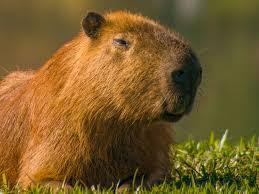
The largest extant rodents are capybaras, which have adults weighing 35-66kg and a length of up to 1.3 meters. They have the shape of a barrel, have short and sturdy limbs and slightly webbed feet which enable them to swim.
Their fur is rough with a colour of reddish-brown to grayish-brown, which gives them the benefit of camouflage in grassy and swampy areas. Their eyes, ears and nostrils are also high-set, enabling capybaras to be largely submerged and yet able to sense peril.
Like other rodents, their teeth are continuously growing, which allows them to digest tough vegetation. Also, capybaras possess specially adapted digestive systems enabling them to efficiently break down fibrous plant matter.
4. Habitat and Geographic Distribution
Capybaras are abundantly found in South America, which also includes Brazil, Venezuela, Colombia, Peru, Argentina and Paraguay. They live in many ecosystems such as rainforests, savannas, wetlands as well as grasslands.
Water is a vital need of capybaras. They are usually located in and about rivers, lakes, ponds, and marshes. Water has several functions: it aids in regulating body temperature, it also provides an escape against predators, as well as sustaining their diet of aquatic vegetation.
Their distribution depends on changes in season, as during dry seasons the water sources are limited and the number of individuals tends to increase around them. This flexibility has been one of the factors behind their overwhelming success as a species.
5. Behavior and Social Structure
Capybaras are very social animals which can be found in groups of 10-20 (however, groups of 100 have been reported in good environs). These groups typically comprise of a dominant male, a few females, secondary males, and youngsters.
In capybara groups, social hierarchy is important. Dominating males exercise their positions by dominating with vocalizations, scent marking, and at times aggression. Capybaras communicate using a wide range of sounds, which may include whistles, barks, clicks, and purrs.
They are mostly diurnal although they can be nocturnal in regions with high human activity. A large proportion of the time, capybaras are grazing, resting or bathing in water. They exhibit their strong social bonding behavior in activities like grooming and cooperative care of young.
6. Diet and Feeding Ecology
Capybaras are vegetarians, whose food is predominantly made up of grasses and aquatic vegetation. They could also consume fruits, bark and tamed crops where they can find them. They are also picky eaters, and usually prefer high-protein plant species.
A distinctive feature of their feeding habit is coprophagy, re-eating of feces. This process helps capybaras to extract more nutrients and increase their digestion efficiency, especially with diets with high cellulose content.
Capybaras prefer to feed in the morning and evenings, shunning the heat of the day. Their grazing patterns may also have a critical impact on the vegetation pattern in their habitat.
7. Reproduction and Life Cycle
The reproduction of capybaras is closely associated with weather, especially rainfall. Breeding usually takes place in the wet season when there is plenty of food.
The gestation period is roughly 150 days and females give rise to litters of 2 to 8 children. Newborns are precocial, that is, quite developed and can walk and swim soon after birth.
Capybaras nurse young ones during a couple of weeks, but in a couple of days, they start to consume vegetation. The young are frequently cared about by group members, and social behavior is cooperative. Average sexual maturity will take one to two years to reach maturity.
8. Ecological Importance
Capybaras are important in their habitats. Being herbivores, they affect the composition of the plant community and help to sustain the grasslands and wetlands.
They also form a significant source of prey to predators like jaguars, pumas, anacondas and caimans. These predators need to be there to sustain the existence of other food web participants.
Also, capybaras help in the cycling of nutrients due to their feeding and excretion behavior, which improves fertility and productivity of the soil and ecosystem.
9. Human Interaction and Economic Significance
The capybaras have long history of interaction with the human beings. They are also poached in their meat in other places that form a delicacy not to mention fasting periods in some religions in particular. They are also making leather out of their hides.
Capybaras have an unusual appearance, and they are highly docile, which has contributed to their popularity in ecotourism. They are even taken as exotic pets in some countries but it is rather worrying to the environment and ethics.
However, conflicts may arise whereby capybaras destroy the agricultural products hence farmers and wildlife conservation may be at war.
10. Conservation Status and Threats
The capybara is now a Species of Least Concern according to the international union of conservation nature (IUCN). This classification is attributed to its extensive dispersion, huge number of population and its ability to integrate in different environments.
That notwithstanding, there are a number of threats that could affect local populations. Agriculture, urbanization, and wetland drainage destruction are major concerns as far as habitat destruction is concerned. Also, overfishing and black market could decrease the populations of some locations.
Climatic changes can also have an impact on water, changing the habitats and distribution of capybars. The protection of the habitats should be conserved, sustainable manage.
11. Future Research Directions
More studies should be conducted on capybaras in order to understand its ecological and behavioral adaptations. Of interest are:
- Climate change effects on wetland ecosystems.
- Climate change effects on wetland ecosystems.
- Adaptation and urban ecology to human environments.
These studies will help develop more effective conservation and management strategies.
12. Conclusion
Capybara is an amazing animal that is extremely important in South American ecosystems. It is a subject of scientific interest because of its flexibility, social multifacetedness, and ecological significance. Although it is not at risk at present, the changing environment and human activity underline the importance of further monitoring and conservation procedures.
Knowledge on the biology and ecology of capybaras is needed to guarantee their long-term sustainability and the well-being of the ecosystems where they live.