
Speciation is an important concept in biology and evolutionary science. It refers to the process through which new species are formed from existing populations of organisms. Over long periods of time, populations of the same species can change due to environmental conditions, genetic variations, and natural selection.
When these changes become significant enough, the populations may become so different that they can no longer reproduce with each other. At this point, a new species is considered to have formed. Speciation helps explain the diversity of life on Earth and how different plants, animals, and microorganisms evolved over millions of years.
What is Speciation
Speciation is the evolutionary process in which a single ancestral species splits into two or more distinct species. In biology, a species is usually defined as a group of organisms that can reproduce with each other and produce fertile offspring. When populations become separated or develop differences that prevent reproduction between them, they gradually become separate species.
This process does not occur quickly. It usually takes thousands or even millions of years. Changes accumulate gradually through genetic mutations, environmental pressures, and natural selection.
Speciation is one of the key mechanisms responsible for biodiversity. The large variety of living organisms seen today is largely the result of repeated speciation events throughout evolutionary history.
The Role of Evolution in Speciation
Evolution is the driving force behind speciation. Evolution occurs when genetic traits within a population change over generations. These changes can occur due to several factors, including mutation, genetic drift, migration, and natural selection.
Natural selection is particularly important in speciation. It occurs when individuals with traits better suited to their environment are more likely to survive and reproduce. Over time, these beneficial traits become more common in the population.
If two populations experience different environmental conditions, they may develop different traits through natural selection. Eventually, these differences can become large enough that the populations can no longer interbreed, resulting in speciation.
Types of Speciation
Scientists generally recognize several different types of speciation depending on how populations become separated. The most commonly discussed types include allopatric speciation, sympatric speciation, parapatric speciation, and peripatric speciation.
Allopatric Speciation
Allopatric speciation occurs when populations of a species become geographically separated. Physical barriers such as mountains, rivers, oceans, or deserts can divide populations. Once separated, the populations experience different environmental pressures and evolve independently.
Over time, genetic differences accumulate, and the populations may become separate species. Allopatric speciation is considered one of the most common forms of speciation.
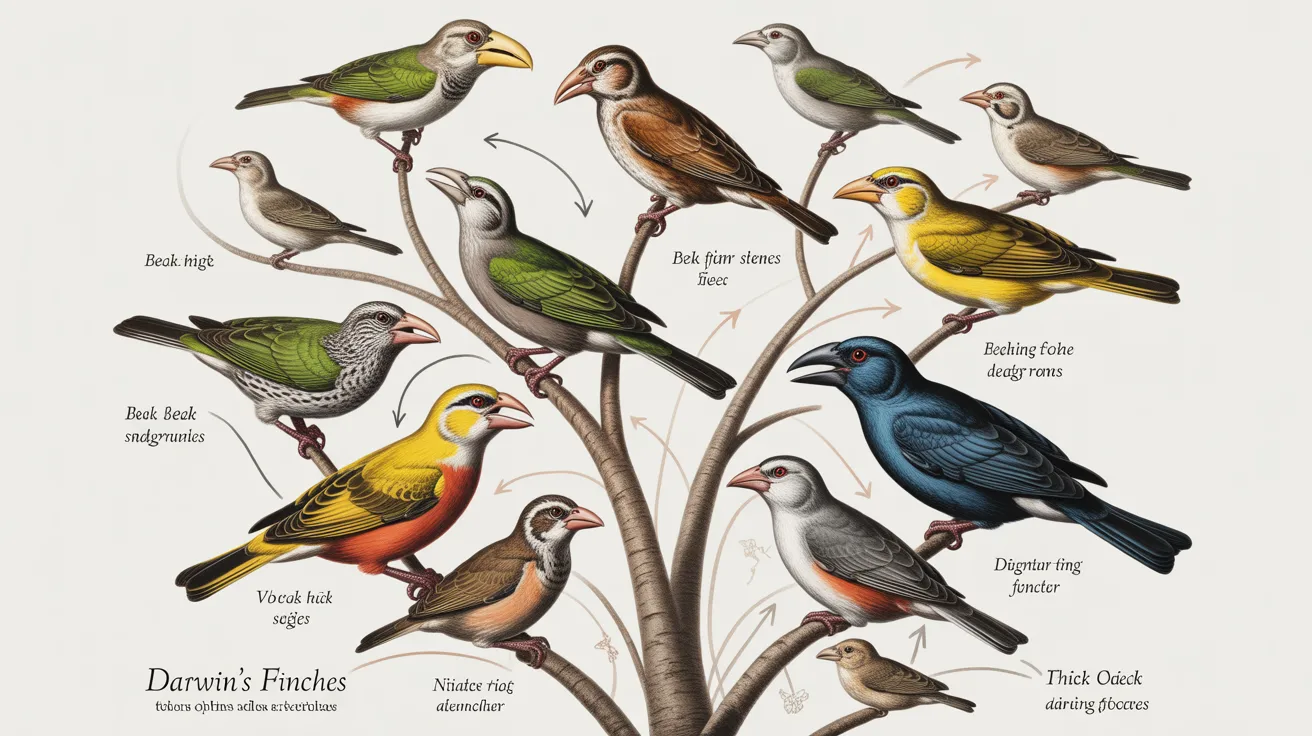
A classic example involves Darwin’s finches in the Galápagos Islands. Different islands have different environmental conditions, which led to the development of finch species with different beak shapes adapted to specific food sources.
Sympatric Speciation
Sympatric speciation occurs when new species form without geographic separation. In this case, populations live in the same area but become reproductively isolated due to genetic changes, behavioral differences, or ecological specialization.
For example, some insects may begin feeding on different plants within the same region. Over time, this preference can lead to reproductive isolation and eventually the formation of new species.
Although sympatric speciation is less common than allopatric speciation, it has been observed in several plant and animal groups.
Parapatric Speciation
Parapatric speciation occurs when populations are located in neighboring regions and experience different environmental conditions. Unlike allopatric speciation, there is no complete geographic barrier between the populations.
However, individuals tend to mate mostly within their own group because of environmental differences or behavioral preferences. Gradually, the populations diverge and may eventually become separate species.
Peripatric Speciation
Peripatric speciation is similar to allopatric speciation but involves a small population that becomes isolated from a larger population. Because the smaller population has limited genetic diversity, genetic changes can occur more rapidly.
Over time, the isolated group may evolve into a distinct species. This type of speciation often occurs when a small group migrates to a new environment.
Reproductive Isolation
A critical step in speciation is reproductive isolation. Reproductive isolation occurs when two populations cannot successfully reproduce with each other.
There are two main categories of reproductive isolation: prezygotic barriers and postzygotic barriers.
Prezygotic barriers occur before fertilization and prevent mating or fertilization between species. Examples include differences in mating behavior, breeding seasons, or physical incompatibility.
Postzygotic barriers occur after fertilization and reduce the viability or fertility of offspring. For example, hybrids between two species may be sterile, meaning they cannot produce offspring.
Reproductive isolation ensures that genetic differences between species are maintained over time.
Speciation in Plants
Speciation in plants often occurs more rapidly than in animals. One reason for this is a process called polyploidy, where plants acquire extra sets of chromosomes.
Polyploidy can instantly create reproductive isolation because plants with different chromosome numbers may not be able to reproduce successfully with the original population.
Many crop plants, such as wheat and strawberries, have evolved through polyploidy. This process has contributed significantly to plant diversity.
Evidence of Speciation
Scientists study speciation using various types of evidence. Fossils provide historical records showing how species have changed over time. Comparative anatomy reveals similarities and differences between species that suggest evolutionary relationships.
Genetic analysis has become one of the most powerful tools in studying speciation. By comparing DNA sequences, scientists can determine how closely related different species are and estimate when they diverged from a common ancestor.
Observations of living populations also provide valuable insights. In some cases, researchers have observed speciation occurring in relatively short periods under controlled conditions.
Importance of Speciation
Speciation is essential for understanding biodiversity and the evolution of life on Earth. It explains how a single ancestral species can give rise to many different species over time.
Speciation also plays an important role in ecology. Different species occupy different ecological niches, allowing ecosystems to function more efficiently. Greater species diversity often leads to more stable ecosystems.
In conservation biology, understanding speciation helps scientists identify and protect unique species and populations. Preserving biodiversity is important for maintaining healthy ecosystems and supporting human well being.
Conclusion
Speciation is a fundamental process in evolutionary biology that explains how new species arise from existing populations. Through mechanisms such as geographic isolation, environmental adaptation, and reproductive isolation, populations gradually diverge and form distinct species. Different types of speciation, including allopatric, sympatric, parapatric, and peripatric speciation, demonstrate the various ways this process can occur.
Over millions of years, speciation has produced the incredible diversity of life seen on Earth today. By studying speciation, scientists gain a deeper understanding of evolution, biodiversity, and the relationships between living organisms. This knowledge also helps guide conservation efforts aimed at protecting the rich variety of species that share our planet.