
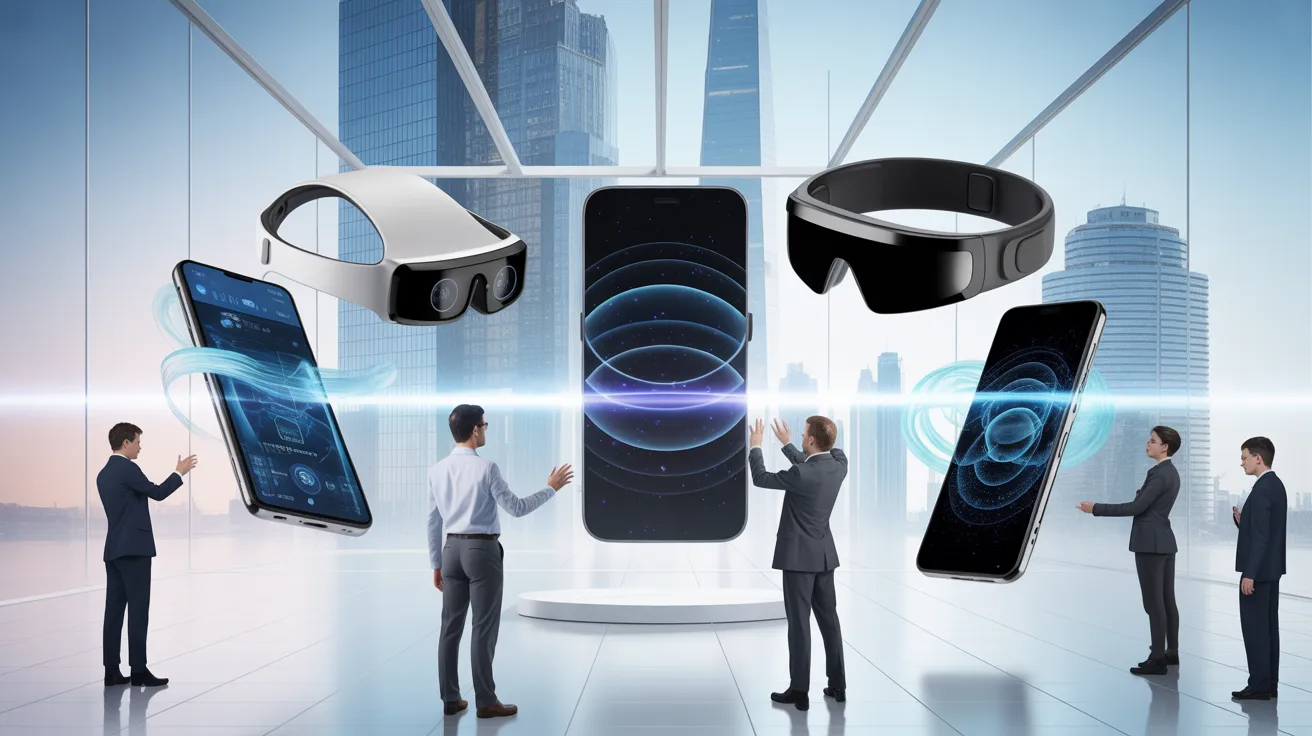
For more than a decade, smartphones have been the center of personal technology. They allow people to communicate, access the internet, use social media, shop online, and manage daily activities.
However, major technology companies are now exploring a future where devices beyond smartphones play the main role in digital life. Research in technology and digital innovation shows that companies are investing heavily in new technologies such as wearable devices, augmented reality, artificial intelligence assistants, and smart environments. These developments suggest that the future of personal computing may move beyond the traditional smartphone.
The Evolution of Smartphones
Smartphones transformed communication and computing when they became widely available in the late 2000s. Devices combined features such as mobile phones, cameras, music players, and internet access into a single portable device. Over time, smartphones became more powerful with better processors, advanced cameras, and high-speed internet connectivity.
Today billions of people rely on smartphones for everyday tasks including navigation, banking, online learning, and entertainment. Despite their importance, many experts believe that smartphone innovation has reached a mature stage. Improvements are now mostly incremental rather than revolutionary. As a result, technology companies are exploring new platforms that could replace or complement smartphones in the future.
Why Tech Companies Are Looking Beyond Smartphones
Several factors are driving technology companies to develop alternatives to smartphones.
First, the smartphone market has become highly competitive and saturated. Most people already own smartphones, which limits growth opportunities for manufacturers. Companies must therefore create new types of devices to continue expanding the technology ecosystem.
Second, users increasingly want more natural ways to interact with technology. Instead of constantly looking at screens, people prefer voice commands, gesture control, and immersive digital experiences. Emerging technologies are designed to make computing more integrated into everyday life.
Third, advances in artificial intelligence, sensors, and wireless communication have created opportunities for new categories of devices that can perform tasks without requiring a traditional smartphone interface.
Wearable Technology
One of the most important developments beyond smartphones is wearable technology. Wearable devices are small electronic products that people wear on their bodies, such as smartwatches, smart glasses, and health trackers.
Smartwatches have already become popular companions to smartphones. They allow users to check messages, monitor health data, and control smart devices without taking out their phones. Advanced sensors in wearable devices can measure heart rate, physical activity, sleep patterns, and other health indicators.
Future wearable technologies may include smart clothing, advanced fitness monitoring devices, and medical sensors capable of detecting early health problems. These innovations may shift some smartphone functions to wearable devices that operate continuously throughout the day.
Augmented Reality and Smart Glasses
Another major direction in post-smartphone technology is augmented reality (AR). AR devices overlay digital information onto the real world. Instead of viewing content on a smartphone screen, users can see digital objects directly in their environment through smart glasses or headsets.
Technology companies are developing AR glasses that display navigation instructions, notifications, or virtual objects while users move through the real world. These devices could eventually replace many smartphone functions, such as checking messages or searching for information.
AR technology is also expected to transform industries such as education, healthcare, engineering, and entertainment. For example, students may learn through interactive 3D visualizations, and engineers may use AR tools to design complex systems.
Artificial Intelligence Assistants
Artificial intelligence is another key technology shaping the future beyond smartphones. AI assistants are becoming more advanced and capable of understanding natural language and performing complex tasks.
Voice-controlled assistants allow users to interact with technology without touching a screen. In the future, AI systems may become proactive digital companions that manage schedules, recommend services, and automate everyday tasks.
These AI assistants may operate through multiple devices, including smart speakers, wearable devices, and connected home systems. Instead of relying on a single smartphone device, users may interact with AI systems distributed across different technologies.
Smart Homes and Ambient Computing
Tech companies are also exploring the concept of ambient computing. In this model, technology becomes integrated into everyday environments rather than concentrated in a single device.
Smart homes already demonstrate this idea through connected devices such as smart lights, smart thermostats, and voice-controlled speakers. These systems allow users to control household functions through voice commands or automated routines.
Future smart environments may include connected vehicles, intelligent workplaces, and smart cities where digital systems operate in the background to assist people without requiring constant interaction with a smartphone.
Mixed Reality and Virtual Reality
Mixed reality and virtual reality technologies are also considered important components of the future digital ecosystem. These technologies allow users to interact with immersive digital environments.
Virtual reality headsets are already used in gaming, training simulations, and remote collaboration. In the future, mixed reality devices may enable new forms of communication, remote work, and entertainment that go beyond smartphone capabilities.
For example, instead of video calls on a phone screen, people might meet in shared virtual environments that simulate real-world interaction.
Challenges in Moving Beyond Smartphones
Although many new technologies are emerging, replacing smartphones completely will be challenging. Smartphones remain extremely convenient because they combine multiple functions in a single portable device.
New technologies must overcome several challenges before they can become widely adopted. These challenges include battery life, device comfort, privacy concerns, and affordability. In addition, users may be hesitant to adopt entirely new forms of technology without clear advantages.
Another important challenge is developing reliable software ecosystems and applications that support new devices.
The Future Digital Ecosystem
Most experts believe that the future will not eliminate smartphones immediately. Instead, new technologies will gradually complement smartphones and eventually reduce their central role.
In the coming years, people may use a combination of devices including smart glasses, wearable sensors, AI assistants, and connected environments. These technologies will work together to create a seamless digital ecosystem.
In such a system, computing will become more invisible and integrated into daily life. Users will interact with technology naturally through voice, gestures, and real-world environments rather than constantly focusing on smartphone screens.
Conclusion
The smartphone has been the dominant technology platform for more than a decade, transforming communication and access to information. However, major technology companies are now investing in innovations that could define the next generation of personal computing.
Wearable technology, augmented reality, artificial intelligence assistants, smart environments, and immersive reality systems are all part of the emerging digital landscape. While smartphones will likely remain important for many years, these new technologies may gradually reshape how people interact with the digital world.
The future beyond smartphones will likely involve a network of intelligent devices working together to provide seamless, personalized, and more natural technological experiences.