
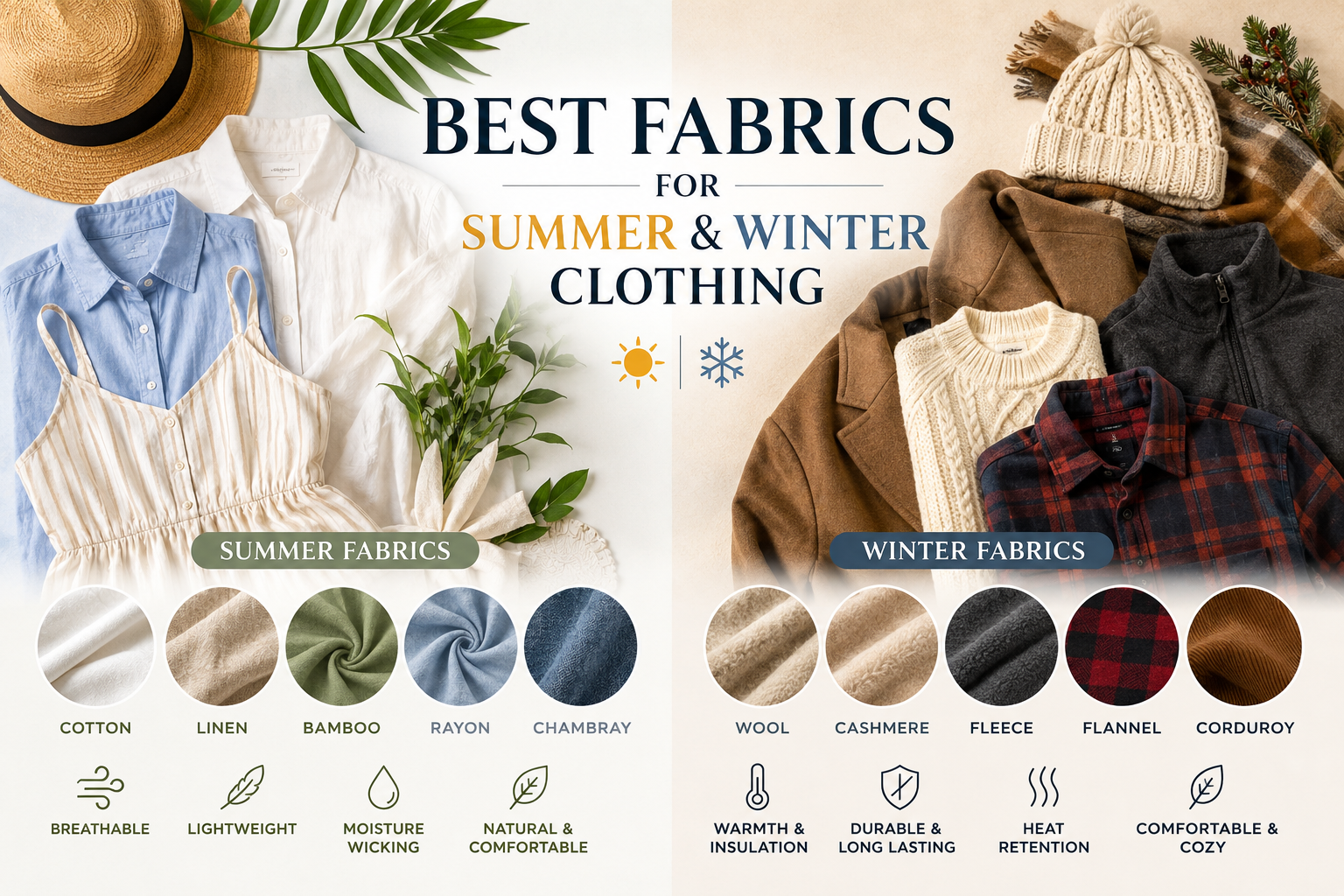
Best Fabrics for Summer and Winter Clothing important as choosing the right style. No matter how fashionable an outfit looks, it won’t feel comfortable if the fabric doesn’t suit the season. During the hot summer months, lightweight, breathable materials help keep you cool, while in winter, warm, insulating fabrics protect you from the cold. Understanding different fabric types allows you to build a wardrobe that offers comfort, durability, and style throughout the year.
Modern fashion is no longer only about following trends. Today’s consumers also consider fabric quality, sustainability, and long-term value before making purchasing decisions. Whether you’re shopping for casual wear, office attire, or special occasions, selecting season-appropriate fabrics can enhance your comfort and extend the lifespan of your clothes.
Why Fabric Choice Matters
Fabric affects almost every aspect of clothing, including comfort, appearance, durability, and maintenance. A well-designed outfit made from poor-quality material may lose its shape, fade quickly, or feel uncomfortable after only a few wears. On the other hand, high-quality fabrics provide better breathability, softness, and long-lasting performance.
Climate also plays a significant role in choosing fabrics. Lightweight materials allow air to circulate and reduce sweating during warm weather, while thicker fabrics trap body heat and provide insulation during colder months. Selecting suitable fabrics for each season helps regulate body temperature naturally without compromising your personal style.
In addition to comfort, fabric quality influences how clothing drapes on the body. Premium materials often maintain their appearance longer, resist wrinkles, and provide a more polished look for everyday wear.
Best Fabrics for Summer Clothing
Summer clothing should be lightweight, breathable, and capable of absorbing moisture. Natural fibers remain the preferred choice because they allow better airflow and help keep the body cool.
Cotton is one of the most popular summer fabrics worldwide. It is soft, breathable, lightweight, and comfortable for everyday wear. Cotton T-shirts, dresses, shirts, and shorts remain wardrobe essentials because they are suitable for both casual and semi-formal occasions.
Linen is another excellent fabric for hot weather. Made from flax fibers, linen offers outstanding breathability and dries quickly, making it ideal for humid climates. Although linen wrinkles easily, many people appreciate its relaxed and elegant appearance.
Rayon is also commonly used for summer fashion. It feels smooth against the skin, drapes beautifully, and provides a lightweight alternative for dresses, blouses, and skirts. However, rayon requires gentle care to maintain its quality.
Bamboo fabric has become increasingly popular due to its softness, moisture-wicking properties, and eco-friendly production. It provides excellent comfort for people with sensitive skin and performs well in warm temperatures.
Lightweight chambray offers the stylish appearance of denim without the heavy weight. It works perfectly for casual shirts, dresses, and relaxed summer outfits.
Choosing light-colored clothing made from breathable fabrics can further improve comfort by reflecting sunlight instead of absorbing heat.
Best Fabrics for Winter Clothing
Winter fabrics focus on warmth, insulation, and protection from cold weather. Thick materials help trap body heat while remaining comfortable for daily wear.
Wool remains one of the best winter fabrics available. It provides excellent insulation, naturally regulates temperature, and continues to keep you warm even when slightly damp. Wool sweaters, coats, scarves, and suits remain timeless winter essentials.
Cashmere offers luxurious softness and exceptional warmth without excessive weight. Although more expensive than regular wool, cashmere garments provide outstanding comfort and elegance when properly maintained.
Fleece has become a popular modern fabric for casual winter clothing. It is lightweight, soft, and highly effective at retaining body heat. Fleece jackets, hoodies, and blankets are ideal for outdoor activities and everyday comfort.
Flannel is another excellent winter fabric, especially for shirts and sleepwear. Its brushed surface creates a soft texture that feels warm against the skin while providing excellent insulation.
Corduroy adds both warmth and style during colder seasons. Its distinctive ribbed texture creates a fashionable appearance while offering additional thickness for trousers, jackets, and skirts.
Layering these fabrics allows better temperature control and makes it easier to adapt to changing weather conditions throughout the day.
How to Choose the Right Fabric for Every Season
Selecting fabrics depends on more than temperature alone. Consider your daily activities, local climate, and personal comfort preferences before purchasing clothing.
If you spend long hours outdoors during summer, prioritize breathable fabrics like cotton, linen, or bamboo. For office environments, lightweight cotton blends provide a professional appearance while remaining comfortable.
During winter, layering multiple lightweight garments often provides better warmth than wearing a single heavy item. Combining cotton base layers with wool sweaters and insulated jackets creates an effective cold-weather outfit.
Fabric care is another important consideration. Some materials require hand washing or dry cleaning, while others are machine washable and easy to maintain. Reading garment care labels before purchasing helps avoid unnecessary maintenance costs.
Sustainability has also become an important factor. Best Fabrics for Summer and Winter Clothing Natural fabrics such as organic cotton, linen, bamboo, and responsibly sourced wool reduce environmental impact while offering excellent comfort and durability.
Investing in high-quality fabrics may cost more initially, but well-made garments often last for many years, making them more economical over time.
Final Thoughts
Best Fabrics for Summer and Winter Clothing combine comfort, durability, and style. Cotton, linen, bamboo, rayon, and chambray provide excellent breathability for warm weather, while wool, cashmere, fleece, flannel, and corduroy offer reliable warmth during colder months.
Rather than filling your wardrobe with trendy pieces that wear out quickly, focus on building a collection of high-quality clothing made from season-appropriate fabrics. This approach not only improves everyday comfort but also ensures your outfits remain stylish throughout the year.
Understanding fabric properties allows you to make smarter shopping decisions, care for your clothing properly, and enjoy garments that look and feel great season after season. Whether you’re dressing for the heat of summer or the chill of winter, the right fabric makes all the difference.