
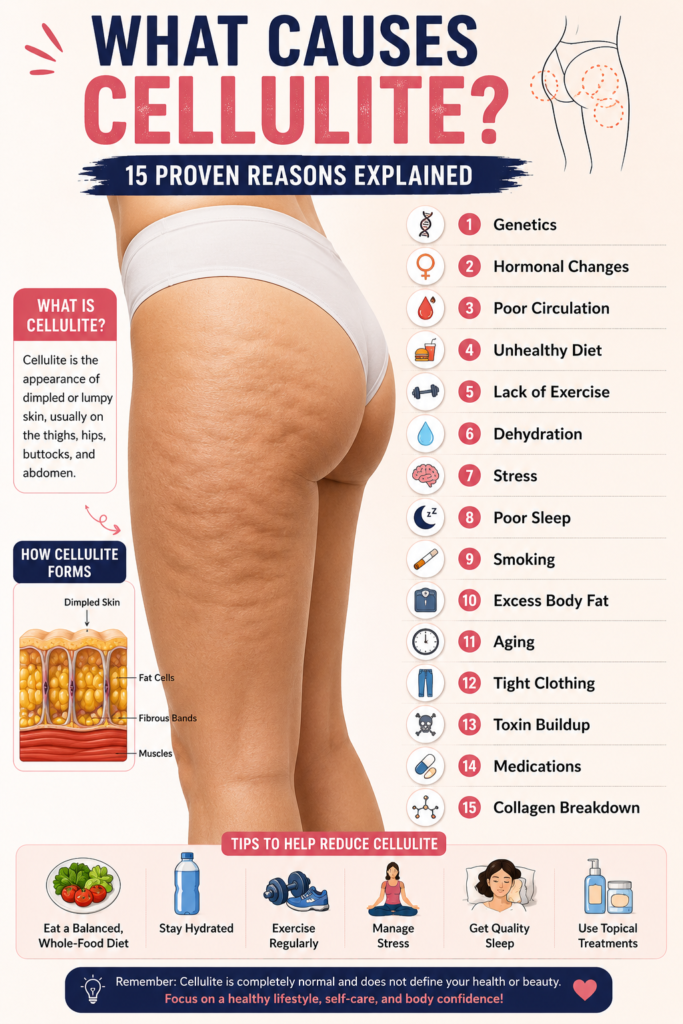
Cellulite is one of the most common cosmetic concerns, affecting nearly 80–90% of women after puberty. Although it is completely harmless, many people wonder why their skin develops a dimpled or uneven appearance, especially on the thighs, hips, buttocks, and abdomen.
Despite popular myths, cellulite is not simply caused by being overweight. Even people who are slim, physically active, and eat a healthy diet can develop cellulite. Understanding what causes cellulite is the first step toward choosing the right prevention methods and treatments.
In this guide, we’ll explain the science behind cellulite, discuss the 15 most common causes, and provide practical tips for reducing its appearance naturally.
What Is Cellulite?
Cellulite is a condition where fat deposits push through the connective tissue beneath the skin, creating a dimpled or “orange peel” appearance.
It most commonly appears on:
- Thighs
- Buttocks
- Hips
- Stomach
- Upper arms
Unlike obesity, cellulite is not a medical disease. It is a natural skin condition that affects people of different body types.
How Does Cellulite Form?
Under the skin are three important layers:
- Skin
- Connective tissue
- Fat cells
As fat cells enlarge, they press upward while the connective tissue pulls downward. This creates the uneven surface that appears as cellulite.
Women are more likely to develop cellulite because their connective tissue is arranged vertically, making it easier for fat cells to push through.
15 Proven Causes of Cellulite
1. Genetics
Genetics play one of the biggest roles in cellulite development.
If your parents or close family members have cellulite, you’re much more likely to develop it as well.
Genes can influence:
- Skin thickness
- Fat distribution
- Connective tissue strength
- Blood circulation
- Metabolism
Unfortunately, genetics cannot be changed, but healthy lifestyle habits can help minimize cellulite’s appearance.
2. Hormonal Changes
Hormones significantly influence cellulite formation.
The main hormones involved include:
- Estrogen
- Insulin
- Thyroid hormones
- Cortisol
Estrogen affects circulation, collagen production, and fat storage. During puberty, pregnancy, or menopause, changes in hormone levels may make cellulite more noticeable.
3. Aging
As we age, our skin naturally loses collagen and elastin.
This causes:
- Thinner skin
- Less elasticity
- Weaker connective tissue
As a result, underlying fat becomes more visible, making cellulite appear worse.
4. Weight Gain
Although cellulite isn’t caused solely by excess weight, gaining body fat can increase its visibility.
Larger fat cells push harder against connective tissue, making dimples more noticeable.
However, it’s important to remember that many thin people also have cellulite.
5. Poor Diet
A diet high in processed foods, sugar, unhealthy fats, and excessive sodium may contribute to cellulite by increasing fat storage and inflammation.
Eating plenty of vegetables, fruits, lean protein, and healthy fats supports healthier skin and connective tissue.
6. Lack of Exercise
Physical inactivity weakens muscles and slows circulation.
Regular exercise helps:
- Improve muscle tone
- Reduce body fat
- Increase blood flow
- Support healthy lymphatic drainage
Strength training combined with cardio often provides the best results.
7. Poor Blood Circulation
Reduced circulation means your skin and connective tissues receive fewer nutrients and less oxygen.
Poor blood flow may contribute to weaker connective tissue and increased cellulite visibility over time.
Walking, stretching, and staying active can help improve circulation.
8. Dehydration
Water plays a vital role in maintaining healthy skin.
When your body is dehydrated:
- Skin appears thinner
- Elasticity decreases
- Cellulite may look more obvious
Drinking enough water won’t eliminate cellulite, but it can improve overall skin texture.
9. Smoking
Smoking damages collagen and reduces blood flow to the skin.
This weakens connective tissue, making cellulite appear deeper and more noticeable.
Quitting smoking benefits not only your skin but your overall health.
10. Stress
Chronic stress raises cortisol levels.
High cortisol can:
- Increase fat storage
- Slow collagen production
- Promote inflammation
Managing stress through sleep, exercise, and relaxation techniques may support healthier skin.
11. Pregnancy
Many women notice cellulite during pregnancy because of hormonal changes, increased fat storage, and reduced circulation.
In many cases, its appearance improves after pregnancy, although some cellulite may remain.
12. Sedentary Lifestyle
Sitting for long periods can reduce circulation and muscle tone.
Taking short walking breaks throughout the day helps improve blood flow and overall skin health.
13. Weak Connective Tissue
Some individuals naturally have weaker connective tissue.
As connective fibers lose strength, fat pushes through more easily, creating the characteristic dimpled appearance.
Maintaining healthy collagen levels may help support stronger skin.
14. Rapid Weight Fluctuations
Frequently gaining and losing weight can stretch the skin and weaken connective tissue.
Maintaining a stable, healthy weight may reduce the appearance of cellulite over time.
15. Gender
Women are significantly more likely to develop cellulite than men.
This difference is mainly due to:
- Hormonal factors
- Fat distribution
- Connective tissue structure
Men generally have thicker skin and stronger connective tissue, making cellulite less common.
Can Cellulite Be Prevented?
While cellulite cannot always be prevented, healthy lifestyle habits may reduce its appearance.
Some effective strategies include:
- Exercising regularly
- Staying hydrated
- Eating a nutrient-rich diet
- Maintaining a healthy weight
- Avoiding smoking
- Managing stress
- Getting enough sleep
Consistency is more important than quick fixes.
Frequently Asked Questions
Is cellulite normal?
Yes. Cellulite is extremely common and affects most women at some point in their lives.
Can skinny people have cellulite?
Absolutely. Cellulite is influenced by genetics, hormones, and connective tissue—not just body fat.
Does drinking water remove cellulite?
No, but proper hydration can improve skin texture and make cellulite less noticeable.
What’s the best treatment for cellulite?
There is no permanent cure. However, exercise, healthy nutrition, massage, radiofrequency treatments, and collagen-supporting skincare may help improve its appearance.
Final Thoughts
Cellulite is a completely normal condition that affects millions of people worldwide. It develops due to a combination of genetics, hormones, aging, lifestyle, and connective tissue structure rather than body weight alone.
Although there is no permanent cure, adopting healthy habits such as regular exercise, proper hydration, balanced nutrition, and maintaining a healthy weight can significantly improve skin texture and reduce the appearance of cellulite over time.
Rather than chasing unrealistic beauty standards, focus on supporting your overall skin health and choosing evidence-based treatments that align with your goals.